We’d leave a gap in the itinerary before adding a third temple. That might seem an odd place to begin an Ubud temple tour, but the walk back up from a valley can change how enthusiastic you feel about the next stop. The route should suit your legs as well as your interests.
Our starting suggestion is Goa Gajah, followed by Gunung Kawi and Tirta Empul around Tampaksiring. Staying in Ubud makes that combination worth considering. With less time, we’d choose two and enjoy the breathing room.
You can leave something for another day.
Temple route for an Ubud temple tour
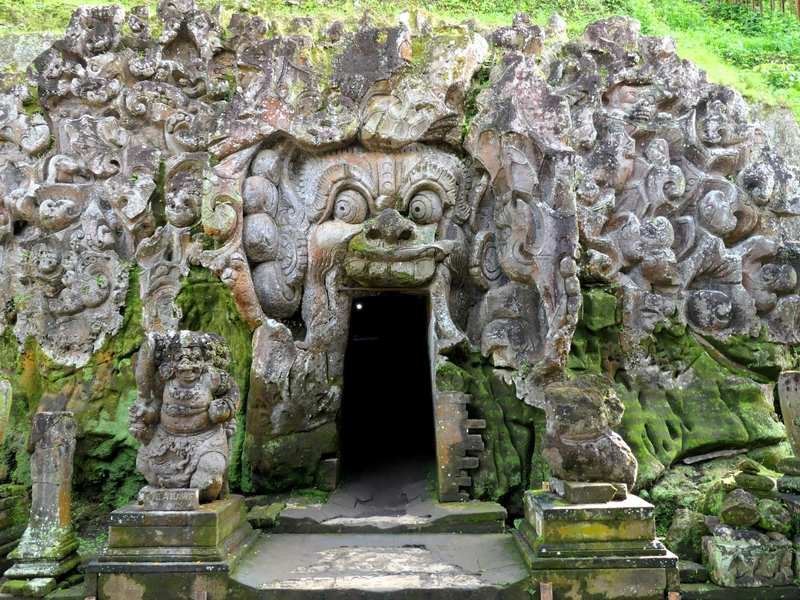
Goa Gajah is a sensible first possibility if your accommodation is south of central Ubud. We’d spend time looking at the carved cave entrance, then explore the bathing pool area. It’s easy to give all your attention to the face above the doorway and barely notice the rest.
Still, we’d resist fixing the order before knowing where you’re staying. A hotel north of Ubud changes the calculation. There’s little pleasure in driving past your later destination just because an itinerary says Goa Gajah comes first.
Gunung Kawi and Tirta Empul make a useful pair in the Tampaksiring area. We’d usually put the more demanding walk earlier, while you’re feeling fresh, with a pause afterwards before deciding how quickly to continue.
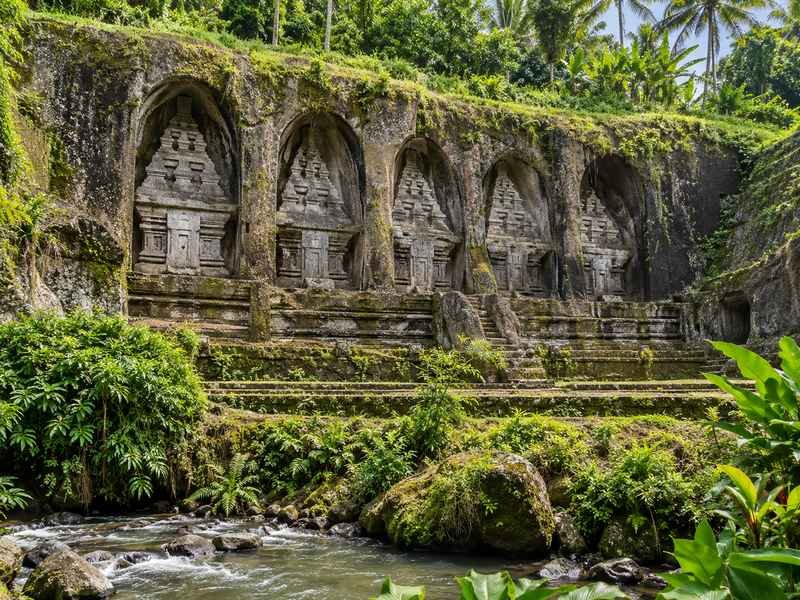
At Gunung Kawi, the descent takes you towards the river valley and its cliff carvings. Lovely setting. But the steps don’t disappear once you’ve taken your photographs, so we’d keep enough energy for the return.
Then there’s Tirta Empul. If you’re simply visiting the permitted courtyards, your pace will differ from someone hoping to participate in a water purification ritual. We’d settle that preference before suggesting how much of the day to set aside.
That’s the shape of the route, not a timetable. Traffic and what is happening at the temples can affect it, and we’d prefer a comfortable adjustment to watching the clock at every entrance.
We’d keep your Ubud temple tour flexible.
Context that makes the stops feel different
You might wonder whether three temple visits will start to feel repetitive. Fair question. We’d only combine them if the differences interest you, because collecting names is a poor reason to spend the day getting in and out of a car.
At Goa Gajah, we’d draw your attention to the carved entrance and the archaeological setting around it. The cave is the familiar photograph, but seeing the bathing pools helps you understand why the visit extends beyond that single doorway.
Gunung Kawi feels different before you even reach the carvings. You’re walking down into a valley. The large shrines cut into the cliff face sit beside the Pakerisan River, and we’d give ourselves time to take in their position within that landscape.
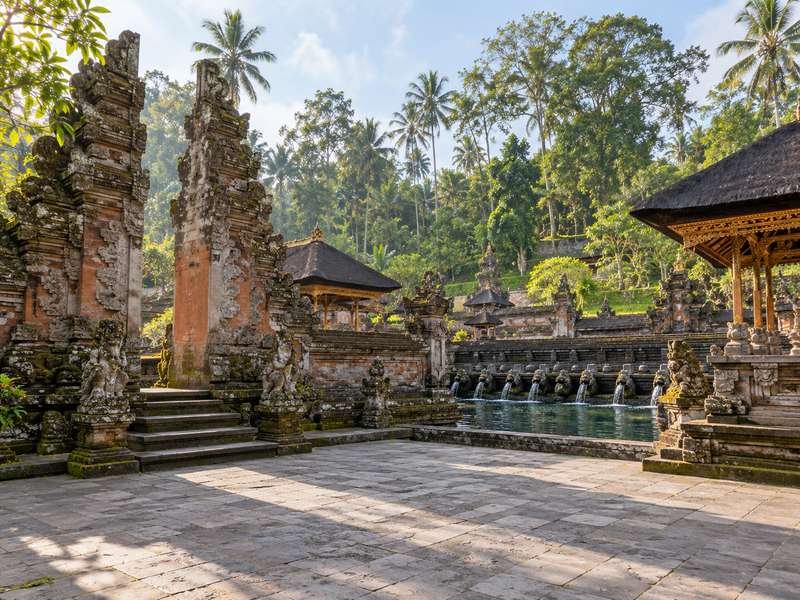
Tirta Empul brings the focus towards spring water and the bathing courtyards. We’d approach it as a place where worship continues, with visitors sharing only the areas open to them. What’s happening there deserves more attention than finding an empty background.
For us, that connection is part of understanding culture in Ubud. The temples aren’t separate from everyday life, even when your own visit lasts only an hour or so.
We’d also leave room for questions. A guide explaining why access stops at a particular gateway can add more to your visit than another photograph taken a few metres closer.
Etiquette without the uncertainty at the entrance
The easiest approach? Arrive ready to follow the instructions at that particular temple. We’d wear modest clothing and expect a sarong with a sash where required, rather than assuming the rules at yesterday’s stop apply everywhere.
There can be uncertainty over what to wear, especially if you’ve seen photographs of visitors dressed differently. We’d follow the attendants’ guidance. An image online tells you very little about where it was taken or what permission was given.
We’d keep our voices low around worshippers and avoid blocking the route through a courtyard. If someone is praying near the photograph you wanted, waiting is the natural choice. You haven’t lost anything by putting the camera down for a moment.
At Tirta Empul, watching and participating are separate decisions. You don’t have to enter the water to appreciate the visit, and we’d never treat ritual participation as a compulsory part of an ubud temple tour.
If you do want to participate, we’d arrange time for the local explanation first. Appropriate clothing and the permitted fountains should be explained on site. Copying the person ahead of you isn’t much of a substitute.
Access may also change during ceremonies. We’d accept a restricted area as part of visiting an active sacred place, even if a photograph had made you hope to go inside.
Access is about the walk after the car stops
This is where we’d be quite direct about Gunung Kawi. There are hundreds of steps. For someone who struggles with stairs, a private car solves the journey to the entrance but leaves the difficult part untouched.
We’d discuss that before including it for older parents or anyone with limited walking confidence. Taking longer can help with the pace; it doesn’t turn a staircase into a level path.
Goa Gajah has steps too. We’d consider how comfortable you feel on uneven outdoor surfaces, particularly after rain, when the walk you expected to be straightforward may deserve more care.
For a wheelchair user, we’d seek current details about the actual visitor route before recommending a stop. Parking access alone wouldn’t convince us. We’d want to know which areas you could realistically reach and enjoy.
We’d also be cautious about adding a waterfall after these visits. Comparing Ubud waterfall tour options for a separate day gives you a chance to consider another walk without committing tired legs to it in advance.
There is nothing disappointing about a shorter route. If two temples leave you comfortable enough to enjoy the second one properly, we’d call that a good decision.
A shorter Ubud temple tour might suit you better.
Booking a route you can comfortably enjoy
Your pickup address tells us more than a request for a full day. Starting in Ubud and starting in Nusa Dua involve different road commitments, so we’d shape the temple visits around the time left after travelling.
For an Ubud temple tour quote, confirm whether entrance tickets and parking are included. We’d clarify the sarong arrangements too, especially if you want to enter the water at Tirta Empul and will need time to change.
Ask whether the service includes a driver or a separate guide. An English speaking driver can help with the journey, but you shouldn’t have to guess whether detailed explanations inside each site form part of the booking.
For a longer stay, we’d look at where this day fits within the rest of your holiday. You can consider our Bali culture and nature tour for the broader trip, then discuss your preferred temple visits separately. Any changes would need agreement before being treated as included.

Questions worth settling before departure
Can we visit without joining a purification ritual?
Yes. We’d leave you time to observe the permitted areas at Tirta Empul without assuming you’ll enter the pools.
Is Gunung Kawi suitable if I struggle with stairs?
We’d probably leave it out. The valley setting is appealing, but knowing you’ll face a difficult climb can take the enjoyment out of being there.
Can we fit this around a half day?
Possibly. We’d begin with your pickup location and choose fewer stops, especially if you have a firm afternoon commitment.
Send Bali Prime Travel your hotel location and the temple you’d most like to see. If stairs are a concern, tell us that too. We’ll help you plan an Ubud temple tour around those details and discuss a private booking that leaves you time to enjoy being there.